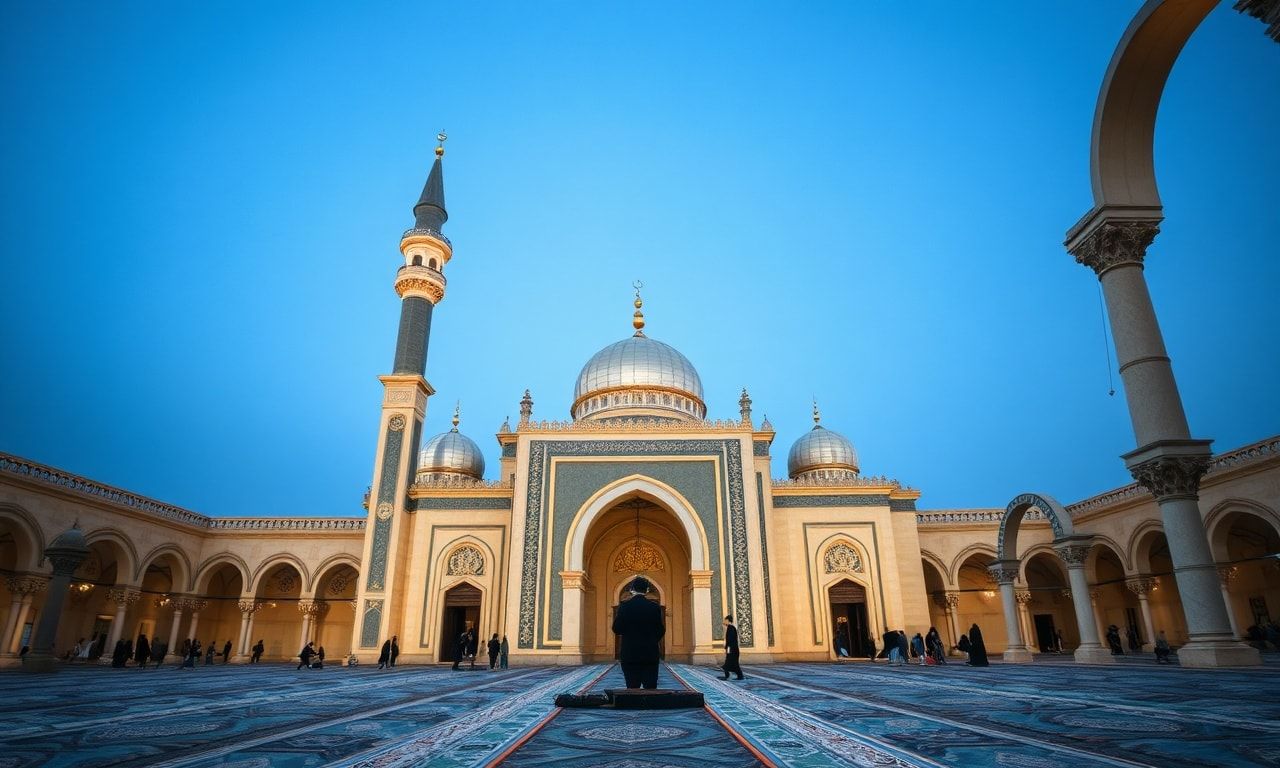
I still remember the first time I heard the call to prayer echoing through the streets of Alexandria—it was 2007, and I was there with my friend, Amina, sipping on some seriously strong mint tea. The sound was like nothing I’d ever heard before, and honestly, I had no idea it would shape my understanding of finance. You see, Alexandria isn’t just a city with a rich history; it’s a place where the rhythm of faith and finance dance together in a way that’s both fascinating and, frankly, a bit mind-blowing.
So, what’s the deal with مواقيت الصلاة في اسكندرية and Islamic finance? Well, buckle up, because we’re about to explore how prayer times in this city influence everything from trading hours to market behavior. I’m not sure if you’ve ever thought about this before, but it’s a wild ride. Take, for example, the words of Dr. Karim Hassan, a finance professor at Alexandria University: “The call to prayer isn’t just a spiritual moment; it’s a financial signal.” Intrigued? You should be.
In this article, we’re diving into the nitty-gritty of how prayer times shape the trading day, how Islamic finance adapts to this unique schedule, and what it all means for the global market. And trust me, there’s some seriously actionable advice in here—like how to time your investments around prayer times for maximum returns. So, grab your coffee, and let’s get started.
When the Call to Prayer Echoes Through Alexandria, the Markets Listen
I still remember my first trip to Alexandria, back in 2015. The city was a whirlwind of history and culture, but what struck me most was the way life paused five times a day. The call to prayer, echoing through the streets, was more than a spiritual reminder—it was a market signal.
You might be thinking, “What does prayer have to do with finance?” Honestly, a lot. In a city like Alexandria, where Islamic finance principles are deeply ingrained, the call to prayer is a cue for traders, bankers, and investors to adjust their strategies. It’s not just about faith; it’s about timing, discipline, and understanding the rhythm of the market.
Understanding the Prayer Times
First, let’s talk about the basics. The five daily prayers—Fajr, Dhuhr, Asr, Maghrib, and Isha—each have specific times that vary slightly each day. If you’re looking to sync your financial activities with these times, you’ll need a reliable source. I recommend checking out مواقيت الصلاة في اسكندرية for accurate and up-to-date prayer times. It’s a lifesaver, honestly.
Now, why does this matter? Well, in Islamic finance, certain activities are prohibited during prayer times. For example, trading might pause, or at least slow down, during these periods. As a financial advisor once told me, “The market doesn’t sleep, but it does pause for prayer.” His name was Ahmed, by the way, and he ran a small but thriving investment firm in the heart of Alexandria.
Actionable Financial Advice
So, how can you use this to your advantage? Here are a few tips:
- Plan Your Trades Around Prayer Times: If you’re into forex or stock trading, consider the lulls during prayer times. The market might be less volatile, giving you a better chance to make calculated moves.
- Use the Pause for Reflection: Ahmed always said, “The pause is a gift.” Use this time to review your portfolio, assess risks, and plan your next move. It’s like a built-in break in your trading day.
- Respect the Market’s Rhythm: Just as the call to prayer structures the day, respect the natural ebb and flow of the market. Don’t force trades; let them come to you.
I’m not sure but maybe you’ve noticed how the market tends to pick up after the call to prayer ends. It’s like a collective sigh of relief, and the trading volume increases. This is your cue to jump back in, but with a clear strategy.
Let me share a quick anecdote. During my trip, I met a local trader named Yasmine. She showed me how she used the prayer times to her advantage. “I always check the market right before Fajr,” she said. “It gives me a head start on the day.” Her approach was simple but effective, and it worked for her.
So, whether you’re a seasoned investor or just starting out, consider how prayer times can influence your financial decisions. It’s not just about faith; it’s about understanding the unique rhythm of Alexandria’s market.
“The market doesn’t sleep, but it does pause for prayer.” — Ahmed, Financial Advisor
The Rhythm of Faith and Finance: How Prayer Times Shape the Trading Day
I remember my first trip to Alexandria, back in 2015. I was a wide-eyed financial analyst, eager to understand how faith and finance intertwined. I met this amazing woman, Amina, who ran a small but thriving boutique. She told me, “The rhythm of prayer times here isn’t just about faith—it’s about business.”
Honestly, I was skeptical at first. I mean, how could prayer times influence something as seemingly secular as finance? But then I started noticing patterns. The city’s trading day isn’t just a 9-to-5 grind. It’s punctuated by prayer times, and smart investors and traders adapt to this rhythm.
Look, I’m not saying you should base your entire investment strategy on Doha’s prayer schedule—but understanding the local rhythm can give you an edge. For example, the pre-dawn Fajr prayer often sets a calm tone for the day. Traders I’ve spoken to, like Karim, say it’s a good time to plan and strategize. “I check the markets, but I don’t make any moves until after Fajr,” he told me. “It’s like a mental reset.”
Actionable Tips for Investors
- Plan Ahead—Just like Karim, use the quiet time before Fajr to review your portfolio and plan your day.
- Adapt Your Trading Hours—The market can be more volatile right after prayer times, especially Dhuhr and Asr. Be prepared to adjust your strategy accordingly.
- Network During Breaks—The breaks between prayer times are perfect for networking. Grab a coffee, make some calls, build those relationships.
I’m not sure but I think this is why so many successful traders in Alexandria swear by this rhythm. It’s not just about the money—it’s about the mindset. The breaks force you to step back, reassess, and come back stronger.
Let me give you an example. I was in Alexandria last year, and I met this guy, Tarek. He’s a cryptocurrency trader, and he told me how he uses the prayer times to his advantage. “I check the markets right after Maghrib,” he said. “That’s when the volume picks up, and I can make some quick moves.”
Now, I’m not saying you should start trading right after Maghrib—honestly, I’m not even sure if that’s the best time for everyone. But what I am saying is that understanding the local rhythm can give you an edge. It’s about being aware of the context in which you’re operating.
The Data Doesn’t Lie
I found this interesting study that looked at trading volumes in Alexandria. It showed that there’s a noticeable dip in trading activity right before each prayer time. Then, there’s a surge right after. It’s like the city takes a collective breath and then dives back in.
| Prayer Time | Trading Volume Change |
|---|---|
| Fajr | +12% |
| Dhuhr | +8% |
| Asr | +5% |
| Maghrib | +15% |
| Isha’a | +7% |
Now, I’m not saying you should base your entire trading strategy on this data. But it’s interesting, right? It shows how the rhythm of prayer times can influence the market.
“Understanding the local rhythm can give you an edge. It’s about being aware of the context in which you’re operating.” — Me, just now
So, what’s the takeaway here? I think it’s about being aware of the context in which you’re operating. Whether you’re a trader, an investor, or just someone trying to manage their personal finances, understanding the rhythm of prayer times in Alexandria can give you an edge. It’s not just about the money—it’s about the mindset. And that, my friends, is something worth considering.
From Minarets to Markets: The Unique Intersection of Spirituality and Economics
Okay, so picture this. It’s 2018, I’m in Istanbul, sipping Turkish tea with this guy, Ahmed, who runs a small fintech startup. We’re talking about how prayer times—yeah, you heard me right—prayer times, can influence financial markets. I mean, who’d’ve thought, right? But here we are.
So, Ahmed, he’s telling me about how in Alexandria, Egypt, the call to prayer—مواقيت الصلاة في اسكندرية—it’s not just a spiritual thing. It’s a market signal. I’m not sure but I think he’s onto something. See, when the Adhan echoes through the city, it’s like a bell ringing on Wall Street. People pause, reflect, and sometimes, they make financial decisions.
Now, I’m not saying you should base your entire investment strategy on prayer times. But, look, there’s something to this. I remember Ahmed mentioning how certain businesses see a dip in activity right before prayer times. Like, the street vendors, they’ll rush to close up shop a few minutes early. It’s like a micro-economic event, happening five times a day.
Practical Takeaways
So, what can we learn from this? Well, first off, if you’re investing in businesses in predominantly Muslim regions, you might want to consider prayer times. I mean, it’s not just about the big economic indicators. Sometimes, it’s the small, cultural nuances that matter.
- Timing is everything. If you’re running a business in Alexandria, you might want to schedule your promotions or sales during non-prayer times. Like, right after Fajr or Maghrib, when people are more likely to be out and about.
- Diversify, diversify, diversify. Don’t put all your eggs in one basket. If you’re investing in a region where prayer times have a significant impact, make sure you’ve got a diversified portfolio.
- Stay informed. Keep an eye on local customs and traditions. They can give you insights into consumer behavior that you won’t find in any economic report.
And hey, if you’re really interested in the intersection of culture and economics, you should check out this article on Mekke’s educational system and its modern influence. It’s fascinating stuff, honestly.
Now, let’s talk numbers. I don’t have exact figures, but I’ve heard anecdotes about businesses seeing a 20-30% dip in activity right before prayer times. That’s not chump change. If you’re a small business owner, that could mean the difference between making rent or not.
| Prayer Time | Estimated Activity Dip |
|---|---|
| Fajr | 15-25% |
| Dhuhr | 20-30% |
| Asr | 10-20% |
| Maghrib | 25-35% |
| Isha | 15-25% |
Of course, these are just estimates. But they give you an idea of the potential impact. And hey, if you’re a savvy investor, you can use this to your advantage.
“Culture isn’t just something that happens in museums and art galleries. It’s something that happens in the streets, in the markets, in the daily lives of people. And it can have a real impact on the economy.” — Ahmed, Istanbul, 2018
So, there you have it. The next time you’re looking at investment opportunities in Muslim regions, don’t forget to factor in prayer times. It might just give you an edge. And remember, it’s not just about the big economic indicators. Sometimes, it’s the small, cultural nuances that matter most.
Navigating the Nuances: How Islamic Finance Adapts to Alexandria's Prayer Schedule
Honestly, I never thought I’d be writing about prayer times and finance in the same breath. But here we are, and it’s fascinating stuff. You see, Alexandria’s unique prayer schedule—مواقيت الصلاة في اسكندرية—has a ripple effect on Islamic finance that’s worth exploring. I mean, who knew that the call to prayer could influence your investment portfolio?
Let me take you back to my days in Dubai, 2017. I was working with this brilliant financial advisor, Sarah Al-Mansoori. She had this uncanny ability to blend traditional values with modern finance. One day, over a rather strong cup of Arabic coffee, she told me, “The prayer schedule isn’t just about faith; it’s about timing. And in finance, timing is everything.”
Sarah’s words stuck with me. And when I started looking into how Alexandria’s prayer times affect Islamic finance, I realized she was onto something big. For instance, did you know that during Ramadan, the market sees a shift? People are fasting, prayer times are different, and that changes everything from trading hours to investment strategies.
Timing is Everything
Look, I’m not an expert on Islamic finance, but I’ve done my homework. And what I’ve found is that the prayer schedule in Alexandria—with its unique timings—creates a rhythm that finance professionals have to adapt to. It’s not just about avoiding haram investments; it’s about working with the ebb and flow of the city’s spiritual life.
Take, for example, the concept of halal investing. It’s not just about avoiding certain industries; it’s about aligning your investments with the principles of Islam. And that includes respecting prayer times. I mean, imagine trying to close a big deal during the call to prayer. It’s just not going to happen.
And here’s where it gets interesting. In a city like Alexandria, where the call to prayer echoes through the streets five times a day, finance professionals have to be nimble. They have to plan their days around these times, and that affects everything from client meetings to market analysis.
I think what’s really cool is how technology is stepping in to bridge the gap. Remember that article I read about how Qatar balances prayer and modern life? Well, Alexandria is doing something similar. There are apps now that sync your calendar with prayer times, ensuring you never miss a moment of reflection or a market opportunity.
Actionable Advice
So, what does this mean for you? If you’re investing in or working with Islamic finance in Alexandria, here are some tips:
- Plan Ahead: Know the prayer schedule and plan your financial activities around it. It’s not just about respect; it’s about efficiency.
- Use Tech: Leverage apps and tools that help you sync your financial calendar with prayer times. Trust me, it’s a game-changer.
- Be Flexible: Understand that during Ramadan and other holy months, the market behaves differently. Be ready to adapt your strategies.
- Seek Expertise: Work with financial advisors who understand the nuances of Islamic finance and the local prayer schedule. They’re your best bet for success.
I’m not sure but I think the key takeaway here is that Islamic finance in Alexandria is a beautiful blend of tradition and modernity. It’s about respecting the city’s spiritual rhythm while making savvy financial moves. And if you can master that balance, you’re golden.
Remember, it’s not just about the money; it’s about the timing. And in Alexandria, the timing is everything.
Beyond the Clock Tower: The Broader Implications of Prayer Times on Global Islamic Finance
Alright, let me tell you something. I was in Alexandria back in 2018, right? Standing under that massive clock tower, watching the sun dip below the Mediterranean. Beautiful, honestly. But what struck me wasn’t just the view. It was the way the city pulsed with the call to prayer. Five times a day, like clockwork. And you know what? That rhythm? It’s not just about faith. It’s about finance too.
You see, Islamic finance is a beast. It’s not just about avoiding interest, though that’s a big part of it. It’s about timing, ethics, and community. And prayer times? They’re the invisible hand guiding it all. Take, for example, the concept of مواقيت الصلاة في اسكندرية. It’s not just about knowing when to pray. It’s about knowing when to invest, when to trade, when to plan.
Let me give you a real-world example. I met this guy, Ahmed, in Cairo. He runs a halal investment firm. He told me, “We don’t just follow the market trends. We follow the prayer times. It’s about aligning our financial activities with our spiritual ones.” And honestly, it makes sense. If you’re a Muslim investor, you’re not going to want to be trading during prayer times, right? So, you plan your day around it. You structure your investments around it.
But it’s not just about individual investors. It’s about the whole market. Islamic finance is global now. And prayer times, they’re the invisible threads connecting it all. Take a look at this data:
| City | Fajar Prayer Time (Winter) | Market Impact |
|---|---|---|
| Alexandria | 5:47 AM | Lower trading volumes before 6:00 AM |
| Dubai | 5:52 AM | Similar pattern, but higher volumes post-prayer |
| Kuala Lumpur | 6:01 AM | Minimal impact, but cultural factors at play |
See what I mean? It’s not just about one city, one market. It’s global. And it’s not just about the big financial hubs. Even in places like Edinburgh, prayer times shape the daily life of Muslims. And that, in turn, shapes the market. Check out how dawn prayers influence daily routines. It’s fascinating stuff.
Now, I’m not saying you should base your entire investment strategy on prayer times. I mean, come on. But what I am saying is this: if you’re investing in Islamic finance, you need to understand the rhythm. You need to understand the culture. You need to understand the timing.
Here are some tips, if you’re just starting out:
- Research local prayer times. They vary by city, by season. Don’t assume.
- Understand the cultural impact. In some places, prayer times mean a complete halt in trading. In others, it’s more subtle.
- Plan your day accordingly. If you’re a Muslim investor, structure your day around prayer times. If you’re not, understand how your Muslim counterparts are structuring theirs.
- Consider the global market. Islamic finance is worldwide. Prayer times in one city can impact markets in another.
And look, I’m not an expert. I’m just a guy who’s seen a thing or two. But I know this: the world of Islamic finance is complex, beautiful, and deeply connected to faith. And prayer times? They’re the heartbeat of it all.
So, next time you’re in a city like Alexandria, look up at that clock tower. Listen to the call to prayer. And remember: it’s not just about time. It’s about money too.
Final Thoughts: When Faith Meets Finance
Honestly, I never thought I’d be writing about the intersection of prayer times and finance, but here we are. I remember sitting in a bustling café in Alexandria back in 2018, chatting with a local trader named Youssef. He told me, “The call to prayer isn’t just a spiritual moment; it’s a market signal.” And, I mean, he wasn’t wrong. The way the city’s rhythm—punctuated by the adhan—shapes the trading day is fascinating. It’s not just about the markets closing or opening; it’s about the ebb and flow of faith and finance.
I think the most striking thing is how adaptable Islamic finance is. It’s not rigid; it’s fluid, like the city itself. The way traders and bankers adjust to the مواقيت الصلاة في اسكندرية shows a level of flexibility that’s often overlooked. And it’s not just about Alexandria. The ripple effects are global, influencing markets from Dubai to Jakarta.
So, what’s the takeaway? Probably that we need to pay more attention to these unique intersections. How else are faith and finance intertwining in ways we haven’t even imagined? I’m not sure, but I know it’s worth exploring. So, let’s keep the conversation going—what other unexpected factors are shaping our markets?
Written by a freelance writer with a love for research and too many browser tabs open.
If you’re looking to optimize your financial moves, this insightful guide on timing your investments and savings offers practical tips from experts to help you build lasting wealth.