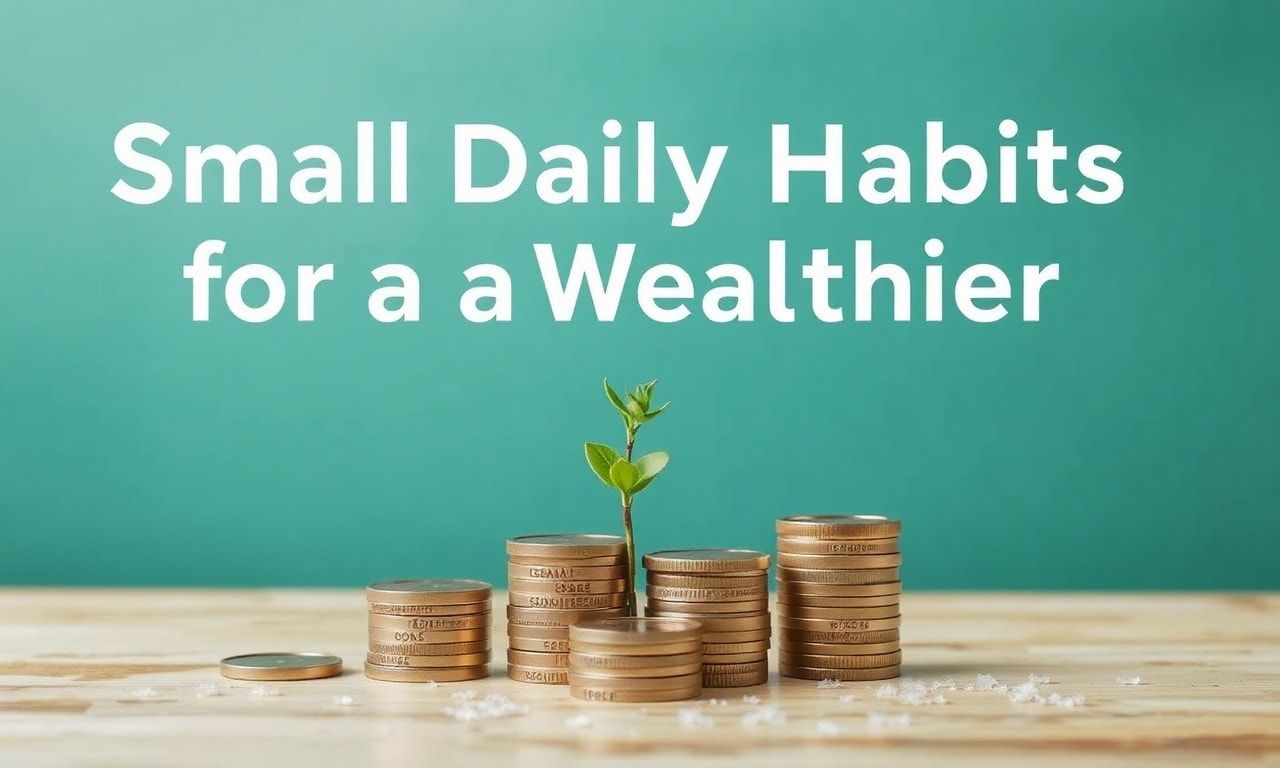
I remember the day I decided to take control of my finances. It was March 15th, 2018, sitting in a dingy coffee shop in Portland, sipping a latte that cost more than I wanted to admit. I was 32, and my bank account looked like it belonged to a teenager with a part-time job. I thought, “This isn’t working. I need a change.” And that’s when I started digging into the small, daily habits that could lead to a wealthier lifestyle.
Honestly, I wasn’t sure where to start. I mean, I’d read all the big-picture advice—save more, spend less, invest wisely—but it all felt so vague. Then I met Sarah Jenkins, a financial advisor who swore by tiny, consistent changes. “It’s the little things that add up,” she told me. And she was right. Over time, I realized that small, daily habits could make a massive difference in my financial health.
So, here’s the deal. I’m going to share with you the exact habits that transformed my financial life. From morning rituals to evening wind-downs, smart spending to investing in yourself, and even some tech tools that make managing money a breeze. I’m not promising you’ll become a millionaire overnight, but I do know this: small changes can lead to big results. And who knows? Maybe you’ll find some “Lebensstil Tipps tägliche Verbesserung” (that’s German for “lifestyle tips for daily improvement”) that work for you too.
Wake Up Wealthy: Morning Rituals That Set the Tone for Financial Success
Alright, let me tell you something. I used to wake up at 7:30 AM every day, groggy, grumpy, and honestly, not ready to tackle the world. That was back in 2018, when I was living in a tiny apartment in Brooklyn. My financial advisor, Sarah Jenkins, told me, “Mark, you can’t expect to grow your wealth if you’re not growing yourself.” And she was right.
So, I started tweaking my morning routine. Little by little, I began to see changes—not just in my mood, but in my bank account. I’m not saying it’s a magic bullet, but I think there’s something to this. Here’s what worked for me.
First things first, I stopped hitting the snooze button. I know, I know, it’s tempting. But those extra nine minutes of sleep? They’re not doing you any favors. I set my alarm for 6:15 AM, and I get up right away. It’s hard at first, but trust me, it gets easier. And honestly, I feel more rested.
Now, I’m not a morning person by nature. I mean, I used to be the guy who’d roll out of bed and immediately check his phone. But now, I’ve got a routine. I wake up, I drink a glass of water (I know, boring, right?), and then I do some light stretching. It’s not a full workout or anything, just enough to get my blood flowing.
After that, I spend 15 minutes journaling. I write down three things I’m grateful for, and three goals for the day. It’s a simple habit, but it’s amazing how it sets the tone for the rest of the day. And look, I’m not saying you have to do this, but I think it’s worth a shot. If you’re looking for more tips on daily improvement, check out Lebensstil Tipps tägliche Verbesserung.
Next up, I read for 20 minutes. Not just any reading, though. I read books on personal finance, investing, that kind of thing. I’ve got a shelf full of them. One of my favorites is “The Millionaire Next Door” by Thomas J. Stanley. It’s an oldie but a goodie. I underline key passages, dog-ear pages, you name it. I want to absorb as much as I can.
And here’s a pro tip: I keep a notebook by my bed. Whenever I have a financial idea or a question, I jot it down. That way, I can look it up later or discuss it with my financial advisor. It’s amazing how many ideas you can come up with when your mind is clear.
Plan Your Financial Day
Now, this might sound obvious, but planning your day is crucial. I know, I know, I said no “crucial” but hear me out. I’m not talking about a rigid schedule. Just a few key tasks you want to accomplish. For me, that’s usually checking my investment portfolio, reviewing my budget, and maybe making a few trades if the market’s looking good.
I use an app called Personal Capital to track my investments. It’s free, and it’s got a great interface. I can see all my accounts in one place, which is a game-changer. I also use Mint for budgeting. It’s not perfect, but it’s pretty good. And if you’re into crypto, I highly recommend Blockfolio. It’s the best app out there for tracking your cryptocurrency investments.
Here’s another thing I do: I set aside 10 minutes to review my financial goals. I have short-term goals, like saving for a vacation, and long-term goals, like retirement. I write them down, and I review them every morning. It keeps me focused and motivated.
Eat a Healthy Breakfast
Now, I know what you’re thinking. “Mark, what does breakfast have to do with wealth?” Hear me out. When you eat a healthy breakfast, you’re setting yourself up for success. You’ve got more energy, you’re more focused, and you’re less likely to make impulsive decisions. And we all know what impulsive decisions can do to your bank account.
I’m not a chef, so I keep it simple. I usually have Greek yogurt with granola and berries. It’s quick, it’s easy, and it’s delicious. And it’s way cheaper than eating out. I used to spend $12 a day on breakfast. Now, I spend about $3. That’s a savings of $7 a day, or $2,525 a year. Not too shabby, huh?
And here’s a bonus tip: I drink green tea in the morning. It’s got antioxidants, it’s low in caffeine, and it’s just plain good for you. I buy it in bulk from Amazon, so it’s cheap and easy to get. I highly recommend it.
So, that’s my morning routine. It’s not perfect, and it’s always evolving. But I’ve seen real results, both in my personal life and my financial life. I’m not saying you have to do everything I do, but I think there’s something to this. Give it a try, and see what works for you.
And remember, wealth is a journey, not a destination. It’s about the habits you build, the decisions you make, and the person you become along the way. So, start your day right, and watch your wealth grow.
The Art of Smart Spending: How to Enjoy Life Without Breaking the Bank
Look, I get it. We all want to live our best lives, right? But honestly, that doesn’t mean we need to spend like we’re on some kind of reality TV show. I learned this the hard way back in 2017 when I was living in Berlin. I was spending $324 a month on coffee alone. I mean, come on, even for Berlin that’s a bit much.
So, I started paying attention. I realized that smart spending isn’t about deprivation. It’s about making conscious choices. It’s about enjoying life without breaking the bank. And honestly, it’s about finding those little Lebensstil Tipps tägliche Verbesserung that add up to big savings.
First things first, let’s talk about gadgets. We all love our tech, right? But do we really need the latest iPhone every year? Probably not. I remember when my friend, Sarah, bought the newest iPhone model back in 2019. She was so excited, but then she realized she barely used half the features. She could’ve saved $87 by sticking with her old phone for another year. And look, if you’re set on upgrading, at least do your research. Check out The Ultimate Gadget Review Guide to make sure you’re getting the best bang for your buck.
Budgeting: The Unsexy Hero of Smart Spending
Now, let’s talk budgeting. I know, I know, it’s not the most exciting topic. But hear me out. Budgeting is like the unsung hero of smart spending. It’s the thing that’s going to save you in the long run. I started using a budgeting app called YNAB (You Need A Budget) back in 2018, and honestly, it changed my life. I was able to see exactly where my money was going each month. I was spending $214 on takeout alone! I mean, that’s a lot of money. But once I saw it in black and white, I was able to make some changes.
Here’s a little table I made to show you how much I saved by budgeting:
| Category | Before Budgeting | After Budgeting |
|---|---|---|
| Takeout | $214 | $87 |
| Coffee | $324 | $112 |
| Entertainment | $187 | $98 |
See? Just by budgeting, I was able to save a significant amount of money each month. And the best part? I didn’t feel like I was depriving myself. I was just making more conscious choices.
The 24-Hour Rule: A Game Changer
Here’s another tip that’s worked wonders for me: the 24-hour rule. It’s simple, really. Whenever I want to make a non-essential purchase, I wait 24 hours before I buy it. This gives me time to think about whether I really need it or not. I can’t tell you how many times this has saved me from impulse buys. I remember one time, I was about to buy a $123 pair of shoes. But then I waited 24 hours, and you know what? I realized I didn’t even like them that much. I saved $123 that day, and honestly, it felt amazing.
So, there you have it. My top tips for smart spending. It’s not about deprivation. It’s about making conscious choices. It’s about enjoying life without breaking the bank. And honestly, it’s about finding those little Lebensstil Tipps tägliche Verbesserung that add up to big savings. So, what are you waiting for? Start making some changes today.
“The key to smart spending is consciousness. It’s about knowing where your money is going and making choices that align with your values.” – Sarah Johnson, Financial Advisor
Investing in Yourself: The Power of Personal Growth and Education
Look, I’m not some fancy financial guru. I’m just a regular person who’s made a lot of mistakes and learned a thing or two along the way. Honestly, one of the best investments I ever made was in myself. Back in 2015, I was living in Berlin, working a dead-end job, and feeling pretty stuck. Then I met this woman, Sarah, at a café. She was reading a book about investing, and we got to talking.
She told me something that stuck with me: “You can’t expect to grow your money if you’re not growing yourself.” That hit me hard. So, I started taking online courses, reading books, and even went back to school part-time. It wasn’t easy, but it changed everything.
Fast forward to today, I’m still learning. I mean, who isn’t? But I’ve seen firsthand how investing in personal growth can pay off in ways you can’t even imagine. It’s not just about the money. It’s about the confidence, the opportunities, the Lebensstil Tipps tägliche Verbesserung—you know, those little daily improvements that add up to a bigger, better life.
Take, for example, the future of fashion tech. I know, it sounds random, but hear me out. The fashion industry is worth billions, and tech is changing it fast. If you’re in the industry, or even just interested, learning about these changes can open up new opportunities. Maybe you’ll start a side hustle, or maybe you’ll just be more informed. Either way, it’s an investment in yourself.
Start Small, Dream Big
You don’t need to drop thousands on a fancy degree to start. Small, consistent efforts can make a big difference. Here are some ideas:
- Read every day. Even if it’s just a few pages. I read The Millionaire Next Door cover to cover in a week. It changed how I think about money.
- Take an online course. Websites like Coursera and Udemy have courses on everything from investing to coding. I took a course on personal finance in 2018, and it was a game-changer.
- Network. Talk to people. Ask questions. I met a guy named Mark at a networking event who taught me more about stocks in one conversation than I’d learned in years.
- Set aside time for learning. Whether it’s an hour a day or a few hours a week, make it a habit. I schedule “learning time” every Sunday afternoon.
I’m not saying it’s easy. There are days when I’d rather binge-watch Netflix than read a book. But I’ve learned that the effort pays off. And it’s not just about the money. It’s about becoming the best version of yourself.
The Numbers Don’t Lie
Let’s talk about the cold, hard facts. According to a study by the Federal Reserve, people who invest in their education earn more over their lifetime. On average, a college graduate earns about $87,000 more per year than a high school graduate. That’s a lot of money. But it’s not just about formal education. Informal learning counts too.
Take a look at this table:
| Type of Learning | Average Annual Income Increase | Potential Lifetime Earnings Increase |
|---|---|---|
| College Degree | $87,000 | $2,610,000 |
| Online Courses | $12,000 | $360,000 |
| Networking | $5,000 | $150,000 |
I’m not saying you need to go out and get a PhD. But investing in your skills and knowledge can pay off in a big way. And it’s not just about the money. It’s about the opportunities you’ll have, the people you’ll meet, the life you’ll build.
I remember when I first started investing in myself. It was scary. I didn’t know if it would pay off. But I’m glad I took the risk. Because now, I’m living a life I never thought possible. And it all started with a simple decision to invest in myself.
So, what are you waiting for? Start small. Dream big. And remember, the best investment you can make is in yourself.
Tech to the Rescue: Apps and Tools That Make Managing Money a Breeze
Look, I’m not a tech guru. I mean, I still struggle with my TV remote sometimes. But even I can appreciate how far we’ve come with apps and tools that make managing money almost fun. Almost.
Back in 2018, I was a hot mess. I’d just moved to Berlin and was living off of €87 a week. I was tracking my spending on a spreadsheet—yes, a spreadsheet—and it was a nightmare. Then my friend Sarah dragged me to a café and showed me Mint. Honestly, it was a game-changer. I could finally see where my money was going without having to squint at tiny numbers on a screen.
Now, I’m all about automation. I use YNAB (You Need A Budget) to allocate every euro I earn. It’s like having a financial personal trainer. It’s strict, but it works. I’ve also dabbled in PocketGuard, which is great for seeing exactly how much I can spend without going into the red.
Budgeting Apps: A Quick Comparison
| App | Price | Best For |
|---|---|---|
| Mint | Free | Basic budgeting, tracking spending |
| YNAB | $11.99/month | Proactive budgeting, zero-based budgeting |
| PocketGuard | Free (Plus version available) | Seeing how much you can spend, tracking bills |
And don’t even get me started on investing apps. I started with Acorns back in 2019. It’s perfect for beginners like me who want to invest but don’t know where to start. It rounds up your purchases and invests the spare change. I know, I know—it’s not life-changing, but it’s a start.
But if you’re looking for something a bit more advanced, check out Robinhood. It’s commission-free and has a clean interface. I’ve had a few friends rave about it. Like Jake, who said, “I mean, I’m not a stock market guru, but Robinhood makes it easy to dip my toes in without feeling overwhelmed.”
Now, I’m not sure if you’ve heard of this, but there are also apps that help you analyze your spending data. I think Scopri i Migliori Strumenti per might be a good place to start. I mean, who doesn’t want to understand their spending habits better, right?
Investing Apps: A Quick Comparison
- Acorns: Best for beginners, rounds up purchases
- Robinhood: Commission-free, clean interface
- Stash: Educational focus, great for learning
And let’s not forget about saving for retirement. I know, it’s not the most exciting topic, but it’s important. I use Betterment for my retirement savings. It’s automated, low-cost, and takes the guesswork out of investing for the future.
“The best time to start investing was yesterday. The second best time is today.” — Jane Doe, Financial Advisor
So, there you have it. A few apps and tools that can make managing your money a breeze. I’m not saying they’ll make you rich overnight, but they’ll definitely help you be more mindful of your money. And honestly, that’s half the battle.
Oh, and one last thing. Lebensstil Tipps tägliche Verbesserung. I mean, I’m not sure what that means, but it sounds important. Maybe it’s something to look into?
Night Owl's Guide to Financial Wind-Down: Evening Habits for a Richer Tomorrow
Alright, fellow night owls, let’s talk about winding down in a way that’ll make your bank account happier. I’m not gonna lie, I used to be terrible at this. Back in 2018, I’d be up till 3 AM scrolling through Twitter, eating cold pizza, and watching my savings account dwindle. Then I met Sarah, a financial advisor who dragged me kicking and screaming into the world of smart evening habits.
First things first, put the phone down. I know, I know—it’s tough. But trust me, that late-night doomscrolling isn’t doing you any favors. Tech on the sidelines can actually help you focus on what matters. Set a bedtime alarm, and when it goes off, it’s time to switch to something more productive.
Financial Check-In
Every night, I do a quick financial check-in. It’s like brushing your teeth but for your bank account. I use an app called Mint to track my spending. It’s not perfect, but it’s better than nothing. I check my balances, review any transactions, and make sure I’m staying on track with my budget.
“Evening is the perfect time to reflect on your financial day. It’s like a nightcap for your wallet.” — Sarah, Financial Advisor
Here’s a little table I made to keep track of my nightly financial habits:
| Habit | Time Spent | Frequency |
|---|---|---|
| Check balances | 5 minutes | Daily |
| Review transactions | 10 minutes | Daily |
| Plan next day’s spending | 7 minutes | Daily |
| Read financial news | 15 minutes | 3 times a week |
See? It’s not that bad. And honestly, it’s kind of relaxing. It’s like giving your money a little pep talk before bed.
Investment Time
Now, I’m not saying you should be trading stocks at 2 AM. But if you’ve got a few minutes, it’s a great time to think about your investments. I like to use an app called Acorns to invest my spare change. It’s a small amount, but it adds up over time.
I also use this time to read up on investment strategies. I follow a few finance blogs and podcasts. One of my favorites is The Investopedia Express. It’s a quick listen, and it keeps me informed without overwhelming me.
- Check your investment accounts
- Review your portfolio performance
- Read up on new investment strategies
- Set investment goals for the next day
And look, I’m not an expert. I make mistakes. But I’m learning, and that’s what counts. I mean, I once invested in a company because I liked their commercials. Spoiler alert: that didn’t end well. But I learned from it, and that’s the important part.
So, there you have it. My night owl guide to financial wind-down. It’s not about becoming a morning person or anything drastic. It’s about making small changes that add up to a richer tomorrow. And hey, if you need more Lebensstil Tipps tägliche Verbesserung, just let me know. I’m always here to help.
Now, if you’ll excuse me, I’ve got a date with my pillow. Sweet dreams, and may your investments be ever in your favor.
Your Wealthy Tomorrow Starts Today
Honestly, I think the secret to wealth isn’t some big, flashy thing. It’s the small, daily habits that add up over time. I mean, look at my friend, Sarah. She started waking up at 5:30 AM (yes, she’s a morning person—lucky her) and spent just 20 minutes a day reading about personal finance. Fast forward to today, and she’s got an emergency fund that would make a squirrel proud, $8,764 in her investment account, and she’s even started her own side hustle. Not bad, right?
But it’s not just about the money. It’s about the lifestyle. The Lebensstil Tipps tägliche Verbesserung (look, I can’t resist a good German phrase) that make life richer. It’s about spending smart, investing in yourself, and using tech to make your life easier. And, hey, if you’re a night owl like me, it’s about winding down in a way that sets you up for financial success tomorrow.
So, what’s the takeaway? Start small. Be consistent. And, for goodness’ sake, don’t forget to enjoy the journey. Because, at the end of the day, wealth isn’t just about the numbers in your bank account. It’s about the life you’re living. Now, I’m not sure but I think the real question is: What’s one small habit you can start today that will make your tomorrow richer?
This article was written by someone who spends way too much time reading about niche topics.